An American Passport Should Not Become a Shield for Financial Crime While Law-Abiding Iranians Face Collective Financial Exclusion حسین عطار جاننثار نوبری
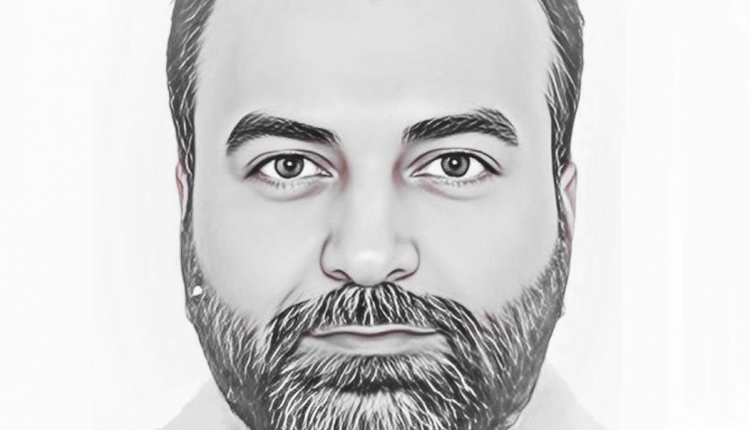
I, HOSSEIN ATAR JANNESAR NOBARI, as the initial petitioner, am calling for an international investigation into a serious vulnerability in the global financial system: the potential misuse of the identities and passports of United States citizens—including homeless and financially vulnerable Americans—as nominal or front persons for companies, bank accounts and cross-border financial structures controlled by other individuals or criminal networks.
The central question of this petition is not whether American citizens should have their rights restricted. They should not.
The question is whether the credibility and international mobility associated with a United States passport can be exploited to create a false appearance of legitimacy, while individuals from countries such as Iran can face severe financial restrictions solely because of their nationality, even when they have committed no financial crime and are not personally sanctioned.
This apparent contradiction deserves independent investigation.
حسین عطار جاننثار نوبری
The vulnerability
The international financial system relies heavily on identity verification, corporate registration, banking credentials and compliance procedures. Yet a person’s formal identity does not necessarily reveal who actually controls a company, who ultimately benefits from its transactions, or where its money originates.
This creates a potential vulnerability when the identity of a United States citizen is used by another person or network as a nominal identity.
Of particular concern is the alleged use of homeless, unemployed or financially vulnerable Americans with little or no genuine commercial background as nominal directors, shareholders, company owners or account holders.
If a person has little financial history, little genuine business activity and no substantial source of wealth, but suddenly becomes associated with companies, international banking relationships and substantial cross-border transactions, that situation should trigger enhanced scrutiny.
The fact that the person holds a United States passport should never substitute for verification of the ultimate beneficial owner (UBO), source of wealth, source of funds and actual controller of the business.
The international dimension
This issue deserves examination across major financial and commercial jurisdictions, including the United States, the United Kingdom and London, Hong Kong, Singapore, Germany, Switzerland and the United Arab Emirates, as well as other international financial centers.
Companies and accounts established in these jurisdictions can potentially be used as intermediaries in international commerce and financial transfers.
Where ownership structures are opaque, the real beneficiaries may be hidden behind nominee shareholders, nominal directors, shell companies or layers of corporate entities.
The consequences can extend far beyond ordinary financial misconduct.
Financial structures that conceal the true owner or source of funds may potentially be exploited for money laundering, drug trafficking, human trafficking, illicit arms trafficking, organized fraud, sanctions evasion and the financing of illegal armed networks or other transnational criminal activities.
In certain circumstances, similar structures may also be relevant to the illicit movement of military-related technology, drones, missiles, controlled components and other restricted goods, as well as other forms of serious transnational organized crime.
This petition does not claim that every American citizen, every American company or every bank in these jurisdictions is involved in criminal activity.
It asks for something more precise:
Investigate whether legitimate American identities and passports are being deliberately used as front identities to obtain financial and commercial access that would otherwise be more difficult for the actual controllers of the activity to obtain.
The unequal treatment of law-abiding Iranians
There is another side to this problem.
Millions of Iranian citizens who have never committed money laundering, terrorism financing, fraud, trafficking or any other financial crime can nevertheless encounter severe restrictions when attempting to access international banking, payments and legitimate commerce.
In many circumstances, the decisive factor is not the individual’s conduct but their Iranian nationality or connection to Iran.
This creates a fundamental question of proportionality and fairness.
Why should an individual who has personally committed no financial crime face severe financial exclusion simply because of nationality, while an American citizen—including a homeless or financially vulnerable American with no meaningful commercial background—may possess a level of international financial credibility and access associated with a United States identity?
The purpose of financial regulation should be to identify actual risk and actual wrongdoing, not to treat nationality as a substitute for evidence.
We therefore call for a system in which:
* the real beneficial owner is identified;
* the real controller of a company is identified;
* the source of wealth is verified;
* the source of funds is examined;
* suspicious changes in financial circumstances are investigated;
* unusual corporate structures receive enhanced scrutiny; and
* individuals are assessed according to evidence and actual risk.
At the same time, law-abiding individuals should not be treated as criminals merely because of their nationality.
Our demands
We, the undersigned, call upon international financial and law-enforcement institutions to:
1. Investigate the alleged use of homeless, financially vulnerable or otherwise economically inactive United States citizens as nominal owners, directors, shareholders or account holders for companies and financial structures controlled by third parties.
2. Examine whether United States passports or identities are being deliberately used to obtain banking, corporate or commercial access for individuals or networks that are the actual beneficiaries or controllers of the activity.
3. Strengthen Ultimate Beneficial Owner (UBO) verification across international financial centers, including London, Hong Kong, Singapore, Germany, Switzerland, the United Arab Emirates and the United States.
4. Require enhanced due diligence where a person’s declared financial circumstances, commercial history and source of wealth are inconsistent with the scale or nature of the business and transactions associated with that person.
5. Investigate whether shell companies, nominee shareholders, nominal directors and similar structures are being used to conceal the proceeds of money laundering, drug trafficking, human trafficking, illicit arms trafficking, organized fraud, sanctions evasion or financing of illegal armed networks.
6. Ensure that possession of a United States passport or other highly trusted identity document does not replace proper verification of beneficial ownership, source of wealth and source of funds.
7. Establish clearer safeguards against collective financial exclusion of law-abiding individuals solely because of nationality, particularly where the individual is not personally sanctioned and has not committed a financial offense.
8. Create transparent and practical channels through which legitimate individuals and businesses from highly restricted jurisdictions can demonstrate their identity, source of funds, beneficial ownership and lawful purpose, and obtain access to permitted international commerce where no legal prohibition applies.
A simple principle
We are not asking for special treatment for Iranians.
We are not asking for restrictions against Americans.
We are asking for one standard for everyone.
A person should not receive financial credibility merely because they possess an American passport.
And a person should not be presumed to be a financial risk merely because they possess an Iranian passport.
Criminal networks should not be able to hide behind legitimate identities, while legitimate people should not be punished merely because of theirs.
I, Husayn ATTAR JANNESAR NOBARI, call upon the relevant international institutions, financial regulators and law-enforcement authorities to investigate this disparity and take concrete steps toward a financial system based on actual conduct, transparent ownership and evidence—not nationality alone.
HOSSEIN ATAR JANNESAR NOBARI
Initial Petitioner
https://600.ge
https://800.ge
https://1ge.ge
You can further help this campaign by sponsoring it
The An American Passport Should Not Become a Shield for Financial Crime While Law-Abiding Iranians Face Collective Financial Exclusion حسین عطار جاننثار نوبری petition to Financial Action Task Force (FATF) was written by hosein jannesar and is in the category Law & Order at GoPetition.